AI hardware is still noisy as a category, but the opportunity is real. A selective window is opening for startups that can combine hardware execution with intelligence-layer product design.
This window exists because three forces are aligning: model capability, capital narrative, and unmet demand in vertical user scenarios.
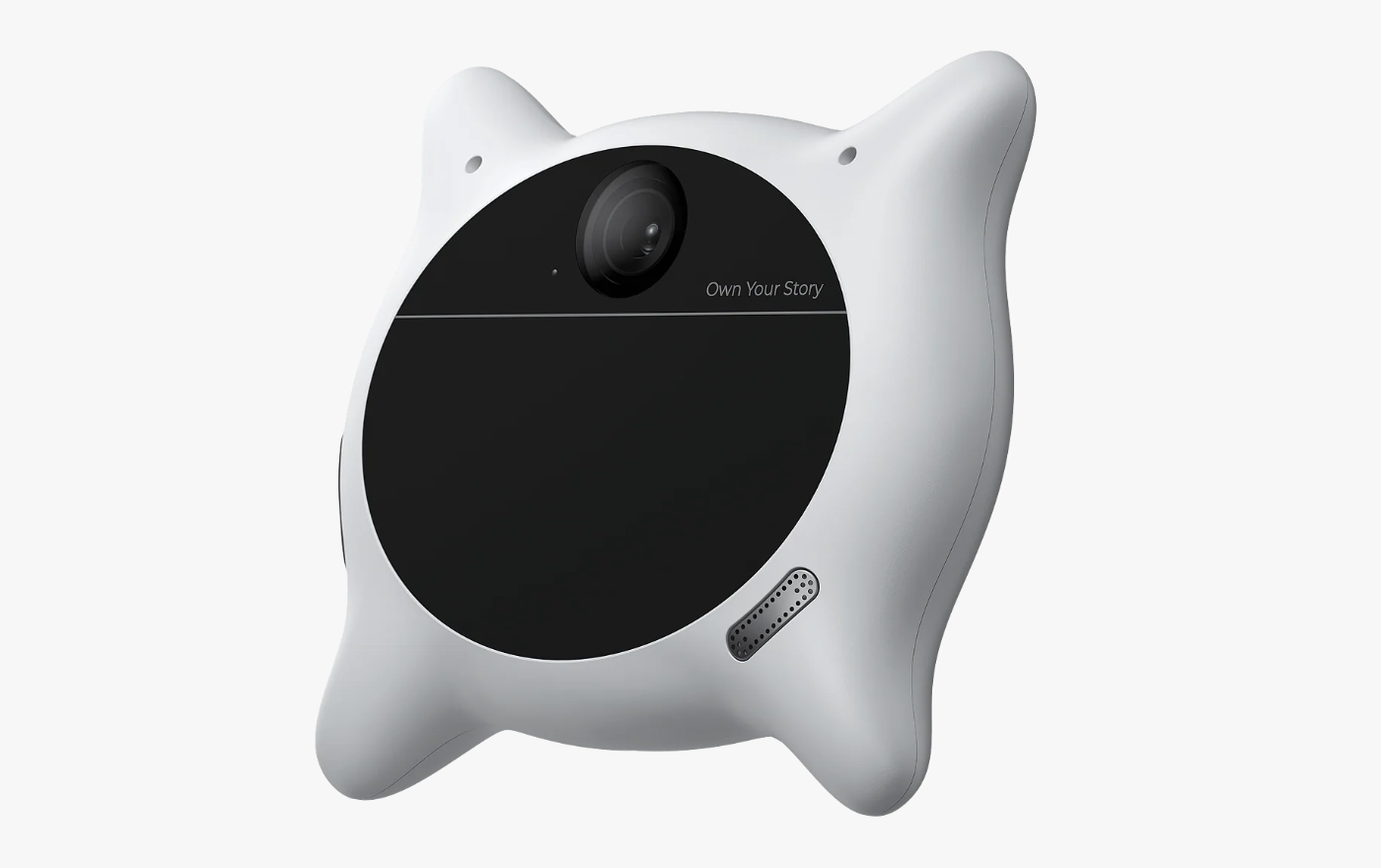 Looki Product Hero Shot, Website
1. Why Now: The Timing Thesis
The first reason is technical maturity. Multimodal models, better orchestration, and improving edge inference now allow wearables to move beyond data collection and into coherent interpretation. In plain terms: hardware can feel intelligent, not just connected.
The second reason is capital attention. Investors are actively revisiting AI + hardware opportunities, especially in health and emotional-value products. Recent fundraising cases such as Looki and Odyss suggest that teams with a believable next-generation interaction story can still attract attention.
The third reason is market structure. Large platforms dominate horizontal categories, but many high-value vertical scenarios are still underbuilt: emotional regulation, early physiological risk warning, and low-friction recovery management. Startups can still win in sharp niches where pain is strong and willingness to pay is high.
The Opportunity Matrix: Problem × Form Factor
A useful framework for mapping where to play is to cross two dimensions: the problem being solved and the hardware form factor.
Problems Worth Solving
| Problem Space | Core Need | Who Cares Most |
|---|---|---|
| Sleep | Recovery, energy, rhythm regulation | Adults 30–55, new parents |
| Metabolic Health | Blood sugar stability, metabolic age, weight | Health-conscious 35+, pre-diabetics |
| Emotional Wellbeing | Stress awareness, mood tracking, mental load | Knowledge workers, burnout-prone professionals |
| Movement & Recovery | Training load, injury prevention, readiness | Athletes, active adults |
| Women’s Health | Cycle tracking, fertility, hormonal shifts | Women 18–45 |
| Companionship | Social connection, engagement, cognitive stimulation | Children, elderly, adults living alone |
Form Factors
| Form Factor | Strengths | Constraints |
|---|---|---|
| Watch / Band | Rich sensors, continuous wear, established category | Crowded, Apple dominance |
| Ring | Discreet, sleep-friendly, fashion-compatible | Limited sensor surface, small battery, multiple sizes |
| Earring / Ear device | Earlobe vasculature (temperature, PPG), fashion appeal | Early-stage technology, small user base |
| Necklace / Pendant | Chest proximity (respiration, posture), decorative | Social acceptance, sensor placement challenges |
| Glasses | Visual augmentation, camera, microphone | High complexity, high cost, style sensitivity |
| Pin / Patch | Minimal form, direct skin contact, disposable options | Limited interaction, low brand identity |
Where the White Space Might Be
The most crowded quadrant is Movement × Watch/Band — this is Whoop, Garmin, Apple Watch and Fitbit territory. The most interesting white space lies in:
- Metabolic Health × Band: Hume Health is proving this works. No subscription, longevity-focused, anti-Whoop positioning.
- Emotional Wellbeing × Ring/Earring: Detecting stress and mood through physiological signals (HRV, temperature, EDA) in a form factor people actually want to wear all day.
- Women’s Health × Ring: Validated by Oura’s cycle tracking and companies like Femometer. Combining temperature, HRV, and cycle-aware coaching in a discreet form factor.
- Companionship × Novel Form Factors: Stickerbox proved that AI + physical output creates magic for kids. The companion device space is wide open for hardware that feels alive.