This note is a reflection on two parallel explorations of the smart earring as a health‑tracking form factor. One comes from industry — the evolution from Lumia to Lumia 2. The other comes from academia — the Thermo Earring and PPG Earring research from the University of Washington’s UbiComp Lab.
Although they look similar on the surface, they represent two very different starting points and, ultimately, two very different destinies.
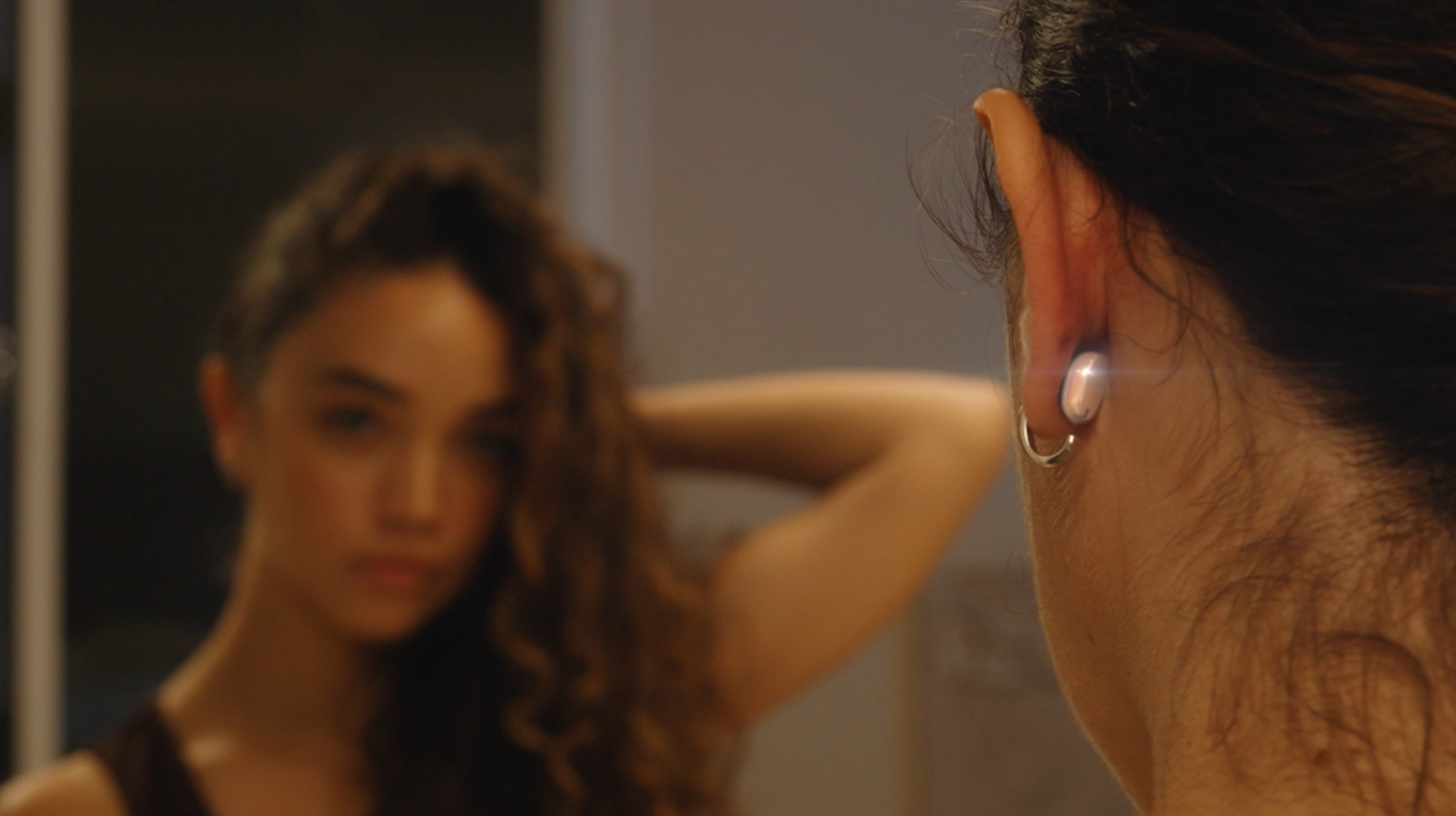 Lumia 2 Product Image from Press Kit
1. Why Lumia Had to Evolve from Lumia to Lumia 2
The original Lumia was not born as a consumer health product. It was a problem‑driven device, designed around a very specific and painful need: detecting blood flow drops associated with POTS and related autonomic disorders. For this user group, the device was not about curiosity or optimization — it was about functionality and safety.
This origin matters. Lumia did not start from the question “what can we sense from the ear?”, but from “who needs to know before their body fails?”. The ear happened to be a viable and meaningful sensing location, not the value proposition itself.
However, this positioning also imposed clear constraints.
First, the addressable market was narrow. POTS and related conditions form a classic vertical medical niche: high pain, high motivation, but limited scale.
Second, the original form factor leaned toward medical or assistive devices. While acceptable — even welcome — for patients, it created psychological friction for broader daily use.
Third, remaining purely medical would cap long‑term growth. To become a durable company, Lumia had to explore whether its core capability could extend beyond a strictly clinical context.
Lumia 2 is the result of this strategic necessity. The shift from an earpiece‑like device to an earring, along with the expansion of sensors (temperature, motion, activity), signals an intentional move toward consumer health — not because consumer health was easier, but because it was unavoidable.
2. The Core Tension: Medical Roots vs. Consumer Expansion
Lumia 2 presents an interesting internal tension.
On the surface, it looks like a typical consumer wearable evolution: more sensors, broader wellness features, and a form factor that blends into everyday aesthetics. In isolation, this resembles the playbook of many consumer health devices.
But underneath, Lumia 2’s true value proposition has not changed.
Blood flow tracking remains the core capability — and it is also the least replaceable one. Heart rate, activity, sleep, and even temperature trends are all domains where watches and rings already perform well enough for most users. Blood flow dynamics, especially in relation to fatigue, dizziness, or near‑syncope, are not.
This creates a strategic dilemma.
If Lumia 2 positions itself primarily as a general wellness accessory, it enters direct competition with deeply established ecosystems like Apple Watch or smart rings. In that arena, Lumia loses its edge.
If, instead, it anchors itself around blood flow–related early warning — even while softening its presentation and expanding its appeal — it preserves a unique axis of value. The device becomes less about “tracking everything” and more about “knowing when something is about to go wrong.”
Importantly, the earring form factor only makes sense in the latter framing. An earring is psychologically light, passive, and unobtrusive. It works best as a quiet guardian, not as a dashboard‑heavy fitness tool.
3. How Users Choose Between Watch, Ring, and Earring
From a user’s perspective, the choice between health‑tracking devices is rarely about sensor counts. It is about responsibility.
Users implicitly ask: which device do I trust to matter when it counts?
Watches excel at performance, control, and activity‑driven feedback. Rings dominate sleep, recovery, and nightly stability. Both are highly replaceable within their categories.
Smart earrings occupy a much narrower psychological space. They are not performance tools. They are not optimization toys. Their only defensible role is early, passive detection of physiological risk — especially when the user may not be actively paying attention.
This is why replace‑ability becomes such a powerful lens.
For general wellness users, Lumia 2 is highly replaceable. A watch or ring already provides sufficient insight.
For users tracking cycles or temperature trends, rings remain better aligned with usage patterns, especially during sleep.
For early adopters, Lumia 2 may coexist as a secondary signal, but novelty alone rarely sustains long‑term use.
For users with POTS, long‑COVID fatigue, or unexplained energy crashes, the calculus changes entirely. Here, Lumia is not competing with watches — it complements them. Its value lies in detecting a dimension others do not, at the moment it matters most.
In other words, Lumia 2 cannot win by being broadly useful. It can only win by being critically useful to the right people, at least for now.
4. Thermo Earring: An Interesting Research Contribution
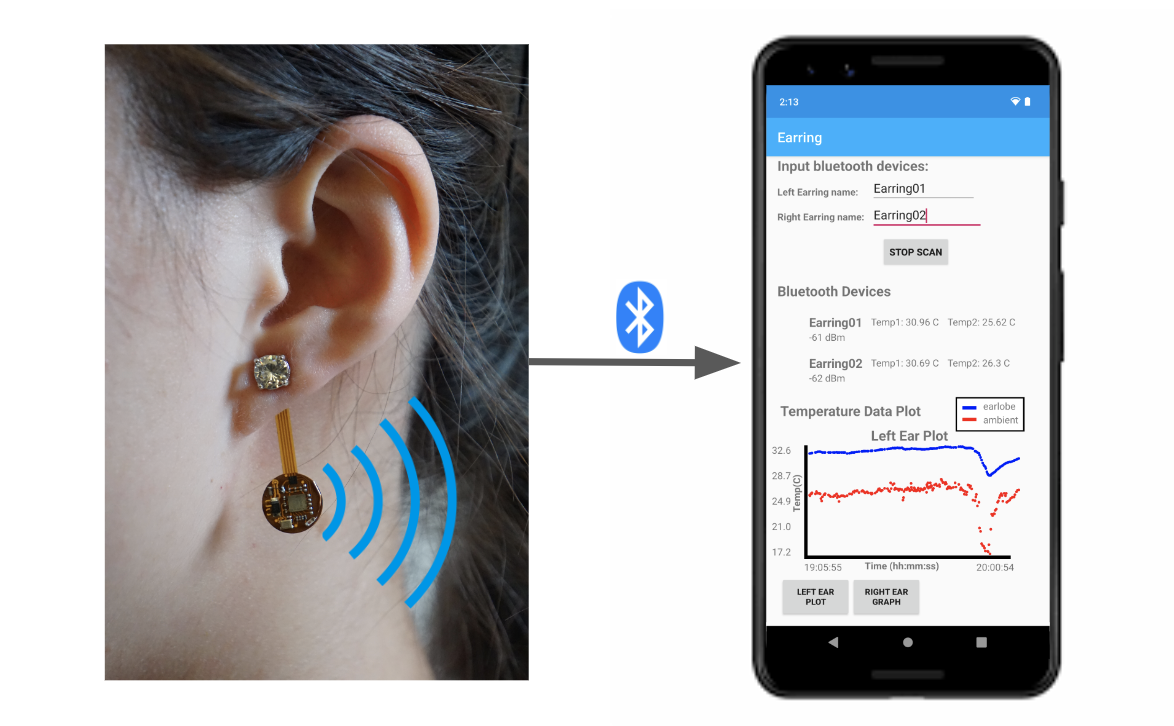 Image from the Thermo Earring Project Page
The Thermo Earring work from the University of Washington’s UbiComp Lab represents a very different starting point.
As a research project, it is well executed. It demonstrates that the ear is a viable site for thermal sensing, explores jewelry as a wearable medium, and opens new design space for future work. From a novelty and feasibility perspective, it succeeds.
However, research success and product viability operate under different constraints.
Thermo Earring begins with the question: what can we sense here? Lumia begins with: who needs this signal enough to wear it every day?
This difference cascades into some practical gaps.
First, decision‑making remains unclear. If the device detects a temperature change, what should the user do next? What happens if they ignore it? Without a concrete action loop, insights remain observational rather than protective.
Second, the breadth of proposed applications becomes a liability. Health, emotion, and context awareness are all mentioned — but none rise to the level of necessity. In consumer products, versatility often signals the absence of a core job and becomes replacable.
Thermo Earring is therefore best understood as a successful exploration of sensing possibilities, rather than a near‑term product blueprint.
Summary
The smart earring is not an inherently flawed idea. But it is a demanding one, and it rewards clarity of intent more than breadth of ambition.
Lumia’s trajectory shows that the form factor only works when anchored to a real, asymmetric problem — one where early detection meaningfully changes outcomes. Expanding toward consumer health is possible, but only if the core medical insight remains intact and continues to define the product’s center of gravity.
Importantly, deliberately choosing a small but sharp entry point is not a weakness. It is often a clever and necessary move in health wearables. Oura began as a tool for biohackers, and Whoop focused narrowly on elite athletes. Both started with users who cared deeply about a specific signal, built credibility and insight density there, and only later expanded into the mass-consumer market. Lumia’s focus on blood-flow–related early warning follows a similar logic.
The Thermo Earring research, on the other hand, represents an excellent academic contribution. It demonstrates strong technical rigor, validates the ear as a viable thermal sensing site, and opens new doors for smart jewelry as a legitimate category rather than a novelty. Its value lies in expanding the design and sensing frontier, even if substantial work remains before such concepts can fully translate into everyday products.
Ultimately, progress in this space benefits from the combination of both paths. Industry efforts ground innovation in real human needs and long-term use, while academic work pushes the boundaries of what is technically and conceptually possible. When these two perspectives inform each other, innovation in health wearables becomes not only faster, but also more likely to endure.